
Faith
By Jonas Brenneman
November 1, 2025
 Now faith is the substance of things hoped for, the evidence of things not seen” (Heb 11:1).
What is faith, and how can it be a confidence and assurance of what is not seen? A basic definition of faith is that it is a confidence or belief in the reality of a certain object. However, this definition still leaves many unanswered questions.
There are few things in this world that we can see or understand the entire reality of. There are often some aspects that we have to have some degree of faith in that will hold up to a consistent pattern of our past experiences, or in our knowledge of the things it is made of. Take, for instance, a wooden chair. Based on my knowledge of wood, its typical strength, and the way it is constructed, I can have faith that it will hold my weight when I sit on it. It usually does. But I cannot say with total certainty that it will support me, since there might be a knot in the wood, or termites may have weakened it to the point it collapses the instant I sit on it. Still, I can sit on a chair with a high degree of confidence that I will be supported.
While this may be a very visible example of faith, we regularly put faith in many things that we have far less certainty about. All my life, I have said that my birthday is on a certain day in March, but I am putting a lot of confidence in something that I have very little factual information about. My parents told me that I was born on that day, and I have a certificate written by a medical doctor that also says it. But it would have been fairly easy for my parents and a doctor to change the date on which I was born, and I would have a very difficult time proving otherwise.
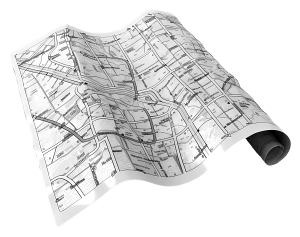 The date of my birth is a small matter and of very little consequence if my faith in being born on that day is incorrect. But we regularly put our faith, or our strong convictions, of reality being a certain way on things that matter a lot more to everyday life, and with just as little evidence. We look up a place on a map or put an address into a GPS and follow the directions to a place we have never seen before, and quite possibly no one we know personally has been there. Given the countless number of ways technology can malfunction and the countless ways that humans try to deceive one another, it would be reasonable to think that the place we are going to may not exist. But we still set off towards it, and are very surprised when our journey gets interrupted, and would be shocked if the place we are traveling to didn’t exist.
Our faith, then, lies in our understanding of the surrounding facts, such as the reliability of the mapmakers and the GPS, as well as information about the place we are going to and many other factors along the way. We gather the information, sift through it with our understanding of reality, and then decide how reasonable it is to trust the collection of information and act accordingly.
It is quite possible to have incorrect perceptions or ideas about reality, and therefore go down harmful paths. Some have thought that consuming lead would help them stay young, and so they put their faith in that understanding and regularly consumed lead. Having faith, or acting in faith, does not mean that the faith is wellplaced and will provide the person with what they are aiming for. It means that the person had considered the factors and is confident to take action towards that end.
When the writer of Hebrews gives this statement of what faith is, he is not talking about a random possibility of something, such as buying a lottery ticket in hopes of winning enough for retirement. Before this statement, the author has given pages of information about who God is, how He is seen working in this world, and how He is relating to humans, especially through Jesus. After his case is built, he draws the conclusion that given all these facts and information about the reality of things, a faith in this is so sure that it is the most reasonable and sensible thing to do to place all our confidence in Jesus, and his teaching, and consider the end results that we cannot yet see, as if they had already happened, just as promised.
« Back to Articles








Comments